
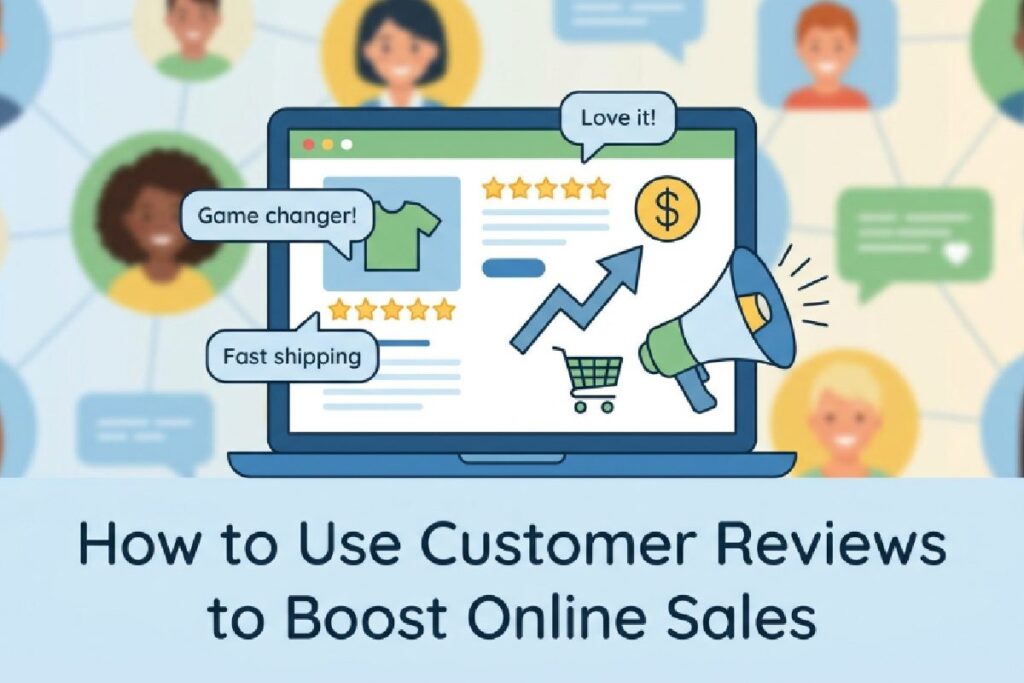
Think about the last time you bought something online that you weren’t already familiar with. Before you hit “add to cart,” there’s a good chance you scrolled down to the reviews first. Maybe you sorted by lowest rating just to see what people complained about. Maybe you looked for photos that other customers had posted. That’s not a coincidence – it’s how almost everyone shops now.
Reviews have quietly become one of the most influential factors in online purchasing decisions, often outweighing the product description, the pricing, or even the brand name itself. And yet, a huge number of businesses still treat reviews as an afterthought — something to passively collect rather than actively use.
That’s a missed opportunity. Reviews aren’t just feedback. They’re a sales asset, a trust signal, and in many cases, a genuine competitive advantage. This guide walks through exactly how to use customer reviews strategically — not just to look good, but to actually drive more sales.
Why Reviews Matter More Than Most Businesses Realize
There’s a reason review sections have become such a central part of the online shopping experience. Customers can’t physically touch a product or meet a service provider before they buy. Reviews fill that gap — they’re the closest thing to a trusted friend’s recommendation that most people get during an online purchase decision.
This effect is even stronger for local and service-based businesses. Someone choosing between three dentists, three contractors, or three restaurants in their area is almost certainly checking Google reviews before making a decision. A business with a 4.8-star rating and hundreds of reviews has an enormous advantage over a competitor with a 3.9-star rating and a dozen reviews — even if the actual quality of service is comparable.
Reviews also do something subtle but important: they reduce the perceived risk of a purchase. Buying from an unfamiliar brand feels risky. Seeing dozens of other people who tried it, liked it, and were happy to say so publicly makes that risk feel much smaller. That reduction in perceived risk is often the difference between someone completing a purchase and someone abandoning their cart.
Step 1: Make Getting Reviews a Real Process, Not an Afterthought
The biggest reason most businesses have fewer reviews than they should isn’t that customers don’t have anything good to say. It’s that nobody asked them at the right moment, in the right way.
Ask at the Right Moment
Timing matters enormously. The best moment to ask for a review is right after a customer has experienced the value of what you offer — right after a successful service call, right after a product arrives and works as expected, right after a great meal. Waiting weeks or sending a generic request months later dramatically reduces response rates.
Make It Easy
Every extra step between a customer wanting to leave a review and actually leaving one reduces how many people follow through. Send a direct link to your Google Business Profile or relevant review platform rather than asking people to search for your business themselves. For service businesses, a simple text message with a clickable review link right after the appointment performs remarkably well.
Automate Where You Can
Many businesses now use automated review request systems — triggered by a completed purchase, a closed service ticket, or a delivered order – that send a follow-up email or text a day or two later. This consistency matters far more than occasional manual requests squeezed in when someone remembers.
Train Your Team to Ask
If you have staff interacting directly with customers, train them to mention reviews naturally at the end of a positive interaction. A simple, genuine “If you have a minute, we’d really appreciate a review — it helps us a lot” works better than people expect, especially when the request feels sincere rather than scripted.
Step 2: Put Reviews Where Customers Will Actually See Them
Collecting reviews is only half the job. If they’re sitting on a third-party platform that potential customers never visit, they’re not doing nearly as much work as they could be.
Feature Reviews on Product and Service Pages
E-commerce businesses see measurable lifts in conversion rate when reviews are displayed directly on product pages rather than requiring a click to an external page. Star ratings near the product title, combined with a handful of detailed reviews further down the page, reassure shoppers exactly when they’re deciding whether to buy.
Highlight Reviews on Your Homepage and Landing Pages
A rotating testimonial section, a trust badge showing your average rating, or a few standout quotes on your homepage all reinforce credibility before a visitor even gets to a specific product or service page. For service businesses, landing pages built for specific campaigns convert noticeably better when paired with relevant testimonials.
Use Reviews in Email Marketing
Abandoned cart emails, post-purchase follow-ups, and promotional campaigns all benefit from including relevant customer reviews. Someone who didn’t complete a purchase might be persuaded by seeing what other customers loved about the exact product they were considering.
Showcase Reviews in Paid Advertising
Star ratings and review snippets used in ad creative — particularly on Facebook and Instagram — often outperform ads without that social proof. Google also displays review extensions in search ads when properly configured, adding visible credibility directly in the search results.
Step 3: Respond to Every Review — Yes, Even the Bad Ones
How a business responds to reviews is, in many cases, just as influential as the reviews themselves. Potential customers don’t just read what people said — they read how the business reacted.
Responding to Positive Reviews
A thoughtful, personalized response to a positive review shows that real people are behind the business and that customer feedback genuinely matters. Generic copy-paste replies are better than nothing, but a response referencing specific details from the review feels far more authentic and reinforces the positive impression for anyone reading later.
Responding to Negative Reviews
This is where many businesses get nervous — and where the biggest opportunity often lives. A negative review handled well can actually build more trust than if it never existed at all. Acknowledge the issue without being defensive, apologize genuinely if appropriate, and offer a clear path to resolution. Take the detailed back-and-forth offline when possible, but make sure the public response shows accountability and care.
Future customers reading that exchange aren’t just judging the original complaint. They’re judging how the business handles problems — which, in many cases, matters more to a potential customer than whether problems happen at all. Every business has occasional negative experiences. What sets businesses apart is how they respond.
Never Ignore Reviews, Positive or Negative
An unanswered string of reviews – especially unanswered negative ones – signals a business that isn’t paying attention. Consistent, thoughtful responses across the board are one of the clearest, most visible signals of a well-run business that potential customers pick up on instantly.
Step 4: Turn Reviews Into Content
Reviews don’t need to live only on review platforms. Some of the most effective marketing content is built directly from genuine customer feedback.
Social Media Posts
- Screenshot a great review and turn it into a simple, branded social graphic
- Create short video testimonials from willing customers for Instagram Reels or TikTok
- Share “customer spotlight” posts that tell a fuller story behind a glowing review
Case Studies and Success Stories
For service-based and B2B businesses, a detailed review or testimonial can be expanded into a full case study – outlining the customer’s challenge, the solution provided, and the measurable result. These tend to be especially persuasive for higher-consideration purchases where a single star rating doesn’t tell the whole story.
User-Generated Content Campaigns
Encouraging customers to share photos or videos using your product, then featuring that content (with permission) across your website and social channels, blends naturally with reviews to create a fuller picture of real customer experiences. This kind of organic content tends to perform exceptionally well precisely because it doesn’t feel like traditional advertising.
Step 5: Use Reviews to Improve, Not Just to Market
It’s easy to think of reviews purely as a marketing tool, but the businesses that benefit most from reviews also treat them as a genuine feedback loop.
Patterns matter more than individual reviews. If multiple customers mention slow shipping, confusing checkout, or a specific product flaw, that’s valuable operational insight — not just something to manage publicly. Businesses that actually act on recurring feedback tend to see their average ratings improve naturally over time, which compounds the marketing benefit as well.
This is also where review monitoring becomes genuinely important rather than just a nice-to-have. Staying on top of new reviews across multiple platforms – Google, Yelp, Facebook, and industry-specific sites – takes consistent attention, especially as a business grows and review volume increases across more channels.
This is exactly the kind of ongoing work an experienced ORM services company handles well — monitoring reviews across platforms, flagging patterns worth addressing operationally, and making sure no review (positive or negative) goes unanswered for long. TrendWaltz works with clients specifically on this kind of structured reputation management, treating reviews as both a sales tool and a continuous source of business insight rather than something to check on only when there’s a problem.
Step 6: Don’t Underestimate the Local SEO Connection
For local businesses, reviews aren’t just a trust signal for customers — they directly influence search visibility. Google’s local ranking algorithm factors in review quantity, review quality, review recency, and how well a business responds to reviews when determining which businesses show up in the Local Pack for relevant searches.
This means a strong review strategy serves two purposes simultaneously: it builds the social proof that converts visitors into customers, and it improves the visibility that gets you found in the first place. A restaurant with consistent, recent, well-managed reviews is genuinely more likely to outrank a comparable competitor with a stagnant review profile — independent of any other SEO work being done.
Where Reviews and Social Media Marketing Intersect
Reviews and social proof work especially well when integrated into a broader social media strategy rather than treated as a separate initiative. A consistent stream of customer testimonials, user-generated content, and review highlights gives a social media calendar authentic, high-performing content that doesn’t require constant brand-generated creative.
This is an area where a dedicated SMO services agency can add real value — not just posting promotional content, but weaving genuine social proof into an ongoing content strategy that builds trust with new audiences while reinforcing credibility with existing followers. When reviews, testimonials, and social media work together intentionally, the combined effect on brand trust and conversion tends to be considerably stronger than either effort running independently.
Common Mistakes Businesses Make With Reviews
Only Asking Happy Customers
Cherry-picking who gets asked for a review – while understandable – can create a skewed, less credible review profile over time, and on most platforms, it’s against the terms of service. A more natural, broad approach to requesting reviews builds a more authentic and ultimately more persuasive collection over time.
Buying Fake Reviews
This might be the single most damaging mistake a business can make. Beyond the ethical problems, platforms like Google and Amazon actively detect and penalize fake reviews, and the reputational damage, if discovered by customers, can be severe and lasting.
Letting Negative Reviews Sit Unanswered
Silence in the face of criticism reads as indifference to potential customers, even when that’s not the intent. A prompt, thoughtful response — even to an unfair review — almost always serves the business better than no response at all.
Treating Reviews as a One-Time Project
Some businesses run a single push for reviews, get a nice boost, and then stop paying attention. Review generation and management need to be ongoing, consistent processes – not a campaign with a start and end date.
Final Thoughts
Customer reviews have moved well beyond being a nice addition to a website. They’re one of the most powerful, cost-effective sales tools available to any business — and unlike a lot of marketing, they’re built almost entirely from work the business has already done well.
The opportunity isn’t just to collect reviews. It’s to actively request them at the right moments, display them where they’ll influence buying decisions, respond to every single one with genuine care, and use the insight they provide to keep improving. Done consistently, this turns customer satisfaction into a compounding marketing asset that keeps working long after the original purchase or service is complete.
In a market where trust is harder to earn and easier to lose than ever, a thoughtful review strategy isn’t optional anymore. It’s one of the most reliable paths to more sales, better visibility, and a stronger brand reputation overall.
Frequently Asked Questions
1. How many reviews does a business actually need to influence buying decisions?
There’s no exact magic number, but research consistently shows that the jump from zero or very few reviews to even 10 to 20 genuine reviews has a meaningful impact on buyer trust. Beyond that, the rate of review accumulation and recency tend to matter more than hitting a specific total. A business with 50 reviews, several of them recent, often outperforms a competitor with 200 reviews that are mostly several years old. Consistency over time — steadily adding new, genuine reviews — builds more lasting trust than a one-time push to hit a particular number.
2. How does TrendWaltz help businesses manage and leverage customer reviews?
As an experienced reputation management provider, TrendWaltz helps businesses build a complete review strategy rather than just reacting to whatever comes in. That includes setting up automated review request systems triggered at the right moments in the customer journey, monitoring reviews across Google, Yelp, Facebook, and industry-specific platforms, and crafting thoughtful responses to both positive and negative feedback. TrendWaltz also helps clients turn strong reviews into usable marketing content — featuring them on websites, in paid ad creative, and across social media — so that genuine customer feedback works actively to drive sales rather than sitting passively on a third-party page. For local businesses specifically, this work is closely tied to local SEO, since review signals directly affect search visibility.
3. What’s the best way to respond to a negative or unfair review?
Start by responding promptly and without defensiveness, even if the review feels unjustified. Acknowledge the customer’s experience, avoid arguing publicly about the specifics, and offer to resolve the issue — ideally, inviting them to continue the conversation privately by phone or email. If the review violates a platform’s policies (contains false claims, hate speech, or is clearly from a non-customer), it’s worth flagging it for removal through the platform’s reporting tools, though removal isn’t guaranteed. In most cases, a calm, professional public response does more to reassure future customers than the negative review itself does to deter them — people generally understand that no business is perfect, and they’re watching how problems get handled.
4. Should I display negative reviews on my website, or only the positive ones?
Counterintuitively, showing a mix — including a few honest critical reviews alongside mostly positive ones — tends to build more trust than displaying only five-star feedback. An all-positive review section can come across as curated or even fake, especially to savvy online shoppers who’ve learnt to be sceptical. A realistic mix, especially when a less-than-perfect review is paired with a thoughtful business response, often makes the overall review profile feel more credible and trustworthy rather than less.
5. How do reviews and social media marketing work together?
Reviews and social media reinforce each other in several ways. Customer reviews and testimonials provide authentic, high-performing content for social posts — often outperforming purely promotional content in terms of engagement. At the same time, an active, well-managed social media presence gives customers more opportunities and platforms to leave feedback, and demonstrates responsiveness when a business publicly engages with comments and reviews. A dedicated SMO services agency can help integrate these efforts intentionally, turning genuine customer sentiment into a consistent stream of trust-building content rather than treating reviews and social media as separate, disconnected activities.